Department of Commerce
CommerceWA Science Awards
Forms and guidelines Past Winners WA Science Hall of Fame Winners


null

2012 Winners

Scientist of the Year

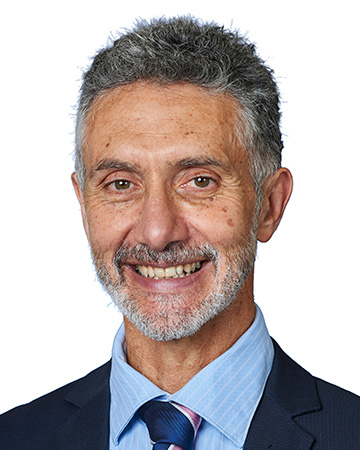
Peter Quinn

Professor Peter Quinn
Director, International Centre for Radio Astronomy Research

Professor Peter Quinn is a world renowned astrophysicist who has conducted pioneering research in galaxy formation and dark matter using large astronomical facilities and high performance supercomputing and data intensive technologies. His career has seen him work on the Hubble Space Telescope, and he has lead the team which designed, built and operated the science systems for the world’s largest optical observatory. Quinn was awarded a Western Australian Premier’s Fellowship in late 2005. On arrival to Western Australia in 2006, he began to build a research community based around radio astronomy and pushed for the SKA project to be located in Western Australia.

As the founding Director of the International Centre for Radio Astronomy Research (ICRAR), Quinn has built up a research organisation of more than 100 staff and students, attracting some of the best researchers in the world to Western Australia. ICRAR has recently been recognised as one of the top 10 centres of its kind in the world. It has raised $26 million in Federal and International grants and it has awarded contracts of more than $3 million to local industries - all within the first three years of its existence. For a State that had no significant role in national or international astronomy before 2005, this is a major achievement.

Quinn’s effort to create ICRAR, plus his role as deputy chair of the ANZ SKA Coordination Committee - the committee that guided the strategy and development of the Australian SKA bid - has played a central role in the success of the Australian SKA campaign.

Early Career Scientist of the Year

Ajmal Mian

Associate Professor Ajmal Mian
Australian Research Fellow, The University of Western Australia

Assoc Professor Ajmal Mian has pioneered research in Australia on the challenging problems of 3D face and object recognition at a time when there was little general expertise in this field. His contributions to the scientific literature and research community are evident in the high number of citations to his research articles and visitors to his website.

Mian has published over 60 scientific papers. His research has proposed mathematical solutions to the following core Artificial Intelligence problems: 3D face recognition and 3D object recognition in complex scenes; automatic fish measurement using underwater stereo video; 3D facial morphometric analysis to detect neurological disorders; and a unique hand identification system that uses a hyperspectral camera to capture palm lines and the veins underneath for biometric identification.

Within five years of graduation, Mian has built a research team of seven comprising himself, one postdoctoral fellow and five PhD students. Together with his research team, he endeavours to find solutions to core Artificial Intelligence problems for a range of multidisciplinary applications.

Student Scientist of the Year

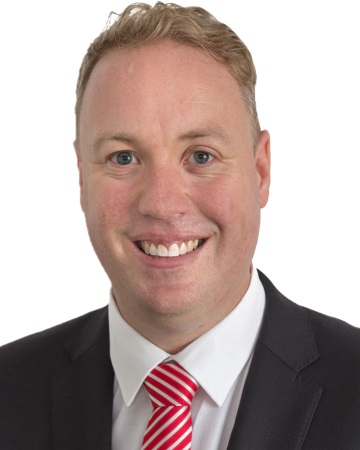
David Erceg-hurn

Mr David Erceg-Hurn
Master of Clinical Psychology / PhD Student, The University of Western Australia

David Erceg-Hurn’s PhD research has focused on the evaluation of strategies to reduce the stigma associated with seeking professional treatment for clinical depression. He has also been involved in several extracurricular research projects investigating other important public health problems including evaluating the effectiveness of a graphic anti-methamphetamine advertising campaign, the ‘Meth Project’, and supporting the design, implementation and evaluation of a program to reduce excessive alcohol consumption amongst Western Australian university students. His research into the Meth Project attracted considerable media attention from local, national and international media outlets, gaining the attention of the Governor of the American state of Montana who invited Erceg-Hurn to provide him with drug policy advice.

Erceg-Hurn graduated with first class honours in undergraduate psychology. As a postgraduate student, he has been the first author on six peer reviewed journal publications, including publications in high impact journals. One paper advocating for the greater use of evidence based statistics was published in American Psychologist, which is the flagship journal of the world’s largest psychology association. This paper is now part of the curriculum in research methods classes at several universities. He has also written a book chapter that was invited by Oxford University Press, and has several additional manuscripts currently under review.

Science Ambassador of the Year

Steven Tingay

Professor Steven Tingay
Director, Curtin Institute of Radio Astronomy; Director, Murchison Widefield Array; Deputy Director, International Centre for Radio Astronomy Research; Premier’s Research Fellow

Professor Steven Tingay has played a key role in communicating the significance of radio astronomy and the SKA to the public, to the science community, to industry and to governments, at state, national and international levels. He is a co-instigator of “Ilgarijiri – Things Belonging to the Sky”, an art-meets-astronomy project that inspires young Indigenous people to consider careers in science and technology related fields.

Tingay creates many opportunities to engage young people, demonstrating that careers in science are diverse, challenging, enjoyable and highly relevant to modern society. This carries over into his undergraduate teaching in astronomy and physics and his supervision of graduate research students.

Tingay’s excellence in science ambassadorship stems from his status as an internationally renowned researcher in his field. He has been the recipient of over $20m of competitive research funding, and more in collaboration with other researchers. He has published 113 papers in international refereed journals and a further 187 in conference proceedings and other un‐refereed outlets. These papers have amassed 2541 citations in the literature. His top cited paper (in the prestigious journal Nature) has 232 citations.

Science Engagement Initiative of the Year

Engineers without Borders

Engineers without Borders
High School Outreach Program

Engineers Without Borders (EWB) High School Outreach Program focuses on improving understanding of issues related to water, climate change, sustainability and appropriate technology. It was developed by the Western Australian Chapter of EWB and has now in use by EWB Chapters in Queensland, Victoria, New South Wales, the ACT and New Zealand with facilitation from Western Australia.

During 2011, the program reached 2,741 students in the State through the delivery of 81 workshops, including seminars and workshops engaging with Year 12 Aboriginal students in Karratha. The program focused on accessing less-advantaged high schools to encourage enthusiasm and pathways towards careers in science and engineering. In 2012, there is an increased focus on the regional areas and an increased goal to reach 3,500 students.

The program has gained a reputation as an excellent resource for engaging high school students, as an assessment tool for university engineering students and as professional development for experienced engineers. Two Western Australian universities have used the program to equip their students’ skills in science communication and engagement, and many of EWB’s corporate partners are now integrating the High School Outreach Program into their social responsibility plans.

Educator of the Year

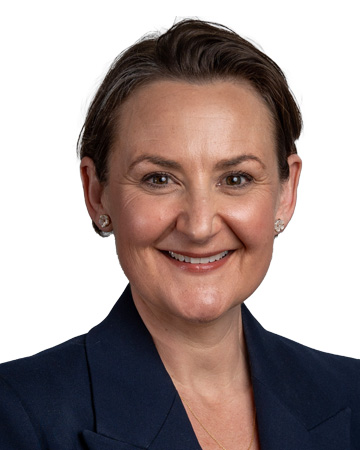
Mady Colquhoun

Mrs Mady (Marion) Colquhoun
Science Specialist Teacher, Armadale Primary School

Mady Colquhoun is a dedicated teacher who has taken a significant leadership role within the primary science education community in Western Australia. She was selected to participate in the 2011 Cross Sectoral Project in which she analysed the Australian Curriculum, provided and analysed work samples, lesson plans and programs and gave feedback on proposed achievement standards. In 2011, in response to the Australian Curriculum, Colquhoun developed three new programs: Life Cycles (with a practicing student) for Year 2, Heat for Year 3 and Adaptations for Year 5.

She has also co-authored a unique cross curricular program, Discovering Dieback aimed at educating upper primary school students (and their parents) about using our forests wisely, in collaboration with the Dieback Working Group. In addition she manages a range of programs aimed at modelling sustainability practices around the school.

As an active member of the Primary Science Committee of the Science Teacher’s Association of Western Australia, she contributes to the provision of professional learning opportunities for primary school teachers and students.

Her desire to engage students and their families in both classroom and real life science situations has led Colquhoun to source and run many enriching extracurricular activities and opportunities in her school community, both to promote general science understanding plus to model and develop sustainable behaviours. Programs include the school’s participation in the Tiwest Zoo Nightstalk, Scitech and Zoo sleepover events, the green team and a family science quiz night.

wa.gov.au